Start Now: Four Steps to Track Transport Emissions for CBAM Importers
Start Now: Four Steps to Track Transport Emissions for CBAM Importers
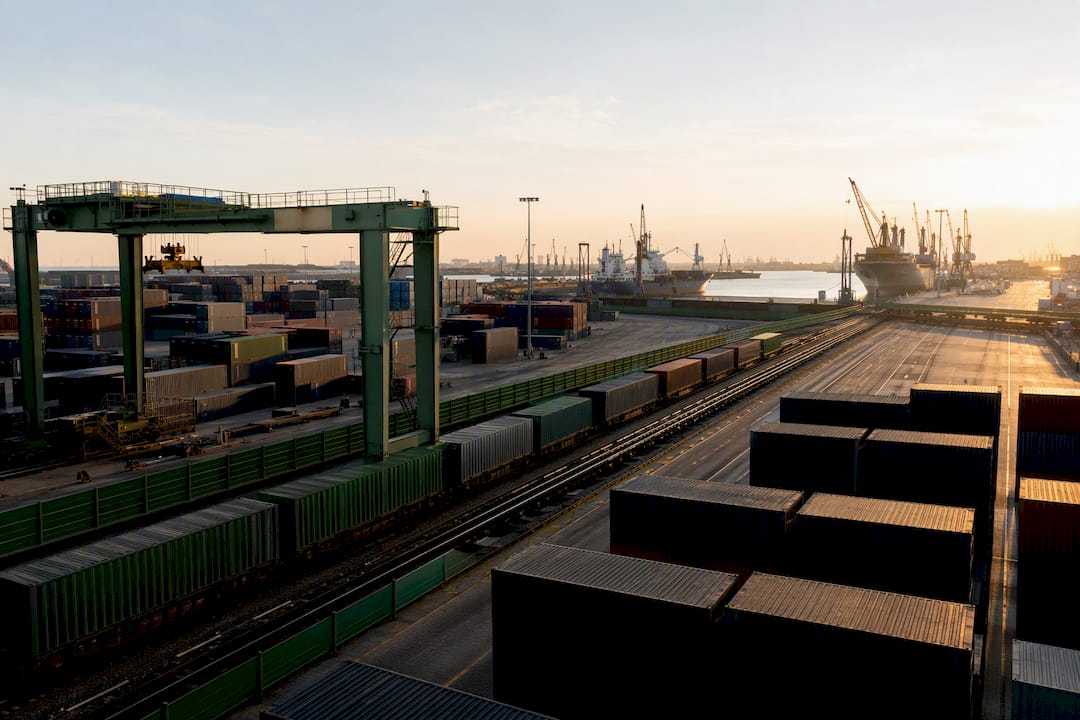
Transport emissions are not yet a required line item in CBAM declarations. The definitive regime that started in early 2026 still limits embedded emissions reporting to production processes for listed goods, but Regulation (EU) 2026/1030 now gives the EU a standardized way to measure transport emissions, which strongly signals where CBAM is headed next. Importers who wait for a mandate will be scrambling for carrier data later. Start collecting it now.
TL;DR:
- Transport emissions are not yet mandatory in CBAM declarations but will likely become required soon, with default values expected to shift through 2029.
- Adding transport data will increase reporting complexity, requiring details on mode, distance, fuel type, and load factor for each shipment.
- Collecting transport emissions data early from freight providers reduces compliance costs and builds a baseline before regulation mandates it.
- Implementing a structured workflow for shipment data ensures smoother filings and prepares companies for transport reporting requirements.
- Building transport emission tracking now will prevent delays and avoid overpaying for certificates as default values are refined over the next few years.
Table of Contents
- What CBAM Covers Today and How the Filing Clock Works
- Where Transport Emissions Stand Now, and Why 2026/1030 Matters
- What Adding Transport Would Mean for Your Filing
- How to Start Collecting Transport Data Right Now
- From Shipment Data to Filed Declaration: A Four-Step Workflow
- Why Getting Ahead of Transport Accounting Pays Off
- A Faster Path to a Filed CBAM Declaration
- Sources
What CBAM Covers Today and How the Filing Clock Works
Regulation (EU) 2023/956 established the Carbon Border Adjustment Mechanism to put a carbon price on imports that matches what EU producers already pay under the EU Emissions Trading System. The idea is straightforward: if a European steel mill pays for its carbon output, an importer bringing in steel from outside the EU should face an equivalent cost. Otherwise, EU manufacturers face a competitive disadvantage that pushes production, and emissions, elsewhere.
CBAM currently applies to a defined list of carbon-intensive sectors, and it splits embedded emissions into two categories: direct emissions from the manufacturing process itself, and indirect emissions from the electricity consumed during production. Transport between the point of origin and the EU border sits outside both categories, for now.
The definitive regime brought real deadlines. Under the regulation’s timeline, the first annual declaration covering calendar year 2026 comes due by May 31, 2027, and declarants must surrender CBAM certificates matching their reported embedded emissions. A few things anchor the compliance picture:
- Authorized declarants must register in the CBAM Registry before filing.
- Verifiers accredited under the regulation’s MRV framework must confirm emissions data before submission.
- The European Commission’s guidance pages publish the calculation methods, templates, and default values declarants are expected to use.
None of this mentions freight yet. That’s about to change.
Where Transport Emissions Stand Now, and Why 2026/1030 Matters
Transport emissions remain outside mandatory CBAM reporting, but calling this a settled question would be misleading. The Commission has treated freight-related emissions as an explicit next focus for years, and the legislative groundwork just arrived.
Regulation (EU) 2026/1030 doesn’t amend CBAM directly. It builds the accounting infrastructure CBAM would need to absorb transport emissions cleanly. The regulation adopts EN ISO 14083 as the reference methodology for quantifying greenhouse gas emissions across transport-chain operations, calculated on a well-to-wheel basis that captures fuel production and combustion together, not just tailpipe output. It also states a clear preference: primary data from carriers first, generic defaults only when primary data isn’t available.
That preference has teeth built into a timeline. The Commission has committed to building a core Union database of default values, a multi-year project extending to the late 2020s, which tells importers this isn’t a same-year mandate but also isn’t a distant hypothetical.
Policy pressure is compounding the legislative signal. Sandbag’s analysis argues that leaving transport out of CBAM creates a real loophole: a good manufactured with low emissions but shipped an enormous distance on heavy fuel oil escapes any carbon accounting for that voyage.
Statistic in focus: the Commission’s own database build-out for transport default values runs on a multi-year timetable extending to 2029, meaning importers relying on defaults today should expect those figures to shift as better data arrives.
Watch three things over the next few filing cycles: new implementing acts referencing transport, updated Commission guidance documents, and any formal CBAM review announcement that names transport emissions directly.
What Adding Transport Would Mean for Your Filing
If transport emissions become a required field, and the accounting infrastructure now exists for exactly that, importers should expect meaningful new obligations layered onto an already detailed filing process.
Today’s declaration asks for embedded production emissions per CN code, origin country, and the applicable direct/indirect split. Add transport, and you’re now tracking mode (ocean, rail, road, air), distance per leg, fuel type, and load factor for every shipment, which makes DOT hazmat battery shipping compliance considerations relevant for specialized transport legs. That’s a different order of data granularity.
- Verifiers will likely require the same accreditation standards for transport data that already apply to production emissions data.
- Supplier-specific figures will beat defaults on cost, because defaults tend to be conservative and push declared emissions higher.
- Higher declared tonnes of CO2e convert directly into more CBAM certificates, and certificate pricing tracks the weekly average auction price of EU ETS allowances.
- Freight-heavy import routes, especially long ocean or air legs, stand to see the largest certificate cost increases once transport counts.
Pro Tip: Request transport emissions data from your freight forwarders now, even informally. Getting them into the habit of tracking and sharing it before it’s mandatory saves you a scramble later, and it gives you a baseline to compare against Commission defaults when they land.
The math is simple even before any rule change: every tonne of CO2e you can document with supplier-specific data instead of a conservative default is a tonne you’re not overpaying for in certificates. That gap only grows as EU ETS allowance prices rise.
How to Start Collecting Transport Data Right Now
You don’t need to wait for a mandate to build the audit trail a future mandate will demand. Here’s the sequence that works:
- Map every shipment line to its HS/CN code, country of origin, mass, and every transport leg involved, noting mode, approximate distance, and fuel type.
- Build data requests into carrier and supplier contracts. Don’t wait for a regulation’s effective date to ask; bottlenecks form when everyone requests the same data at once.
- Use EN ISO 14083-compatible factors or Commission defaults as a fallback only when primary carrier data genuinely isn’t available.
- Keep transport emissions separate from production emissions in your data model. Mixing them invites double-counting and slows down verifier review once transport data becomes reportable.
- Pilot the process on your highest-emission trade lanes first, then scale the data-sharing agreements and automate the mapping into your CBAM-ready fields.
Pro Tip: Treat your worst lane, typically the longest ocean or air route with the heaviest cargo, as your pilot. If your process holds up there, it will hold up everywhere else.
Our guide to CBAM emission factors walks through exactly when supplier data should override a default value, and it applies just as cleanly to transport once that data starts flowing in.
From Shipment Data to Filed Declaration: A Four-Step Workflow
Turning a spreadsheet of shipments into a Registry-ready declaration follows a repeatable pattern, regardless of what tool handles it.
- Enter imports. Every shipment goes in with its HS/CN code, mass, country of origin, and relevant metadata.
- Match CN codes. Each line resolves to its CBAM category, so you know instantly which imports are in scope and what’s still missing.
- Apply emissions. Supplier-specific data fills in where it exists; Commission defaults cover the gaps. Transport data, where you have it, stays documented separately from production figures.
- Export and file. The declaration comes out in the format the CBAM Registry expects, with a retained record for verifier review.
The gap between having emissions data and having a filing-ready declaration is where most importers lose weeks. Structuring the workflow around CN code matching first, then emissions resolution, closes that gap without guesswork.
That structure matters more once transport becomes reportable, because it’s already built to keep new data categories separate and auditable.
Why Getting Ahead of Transport Accounting Pays Off
Most compliance teams treat transport emissions as a future problem because it’s not yet a legal requirement. That’s a mistake, and not because the rule is imminent. It’s because the data infrastructure takes longer to build than the regulation will take to pass.
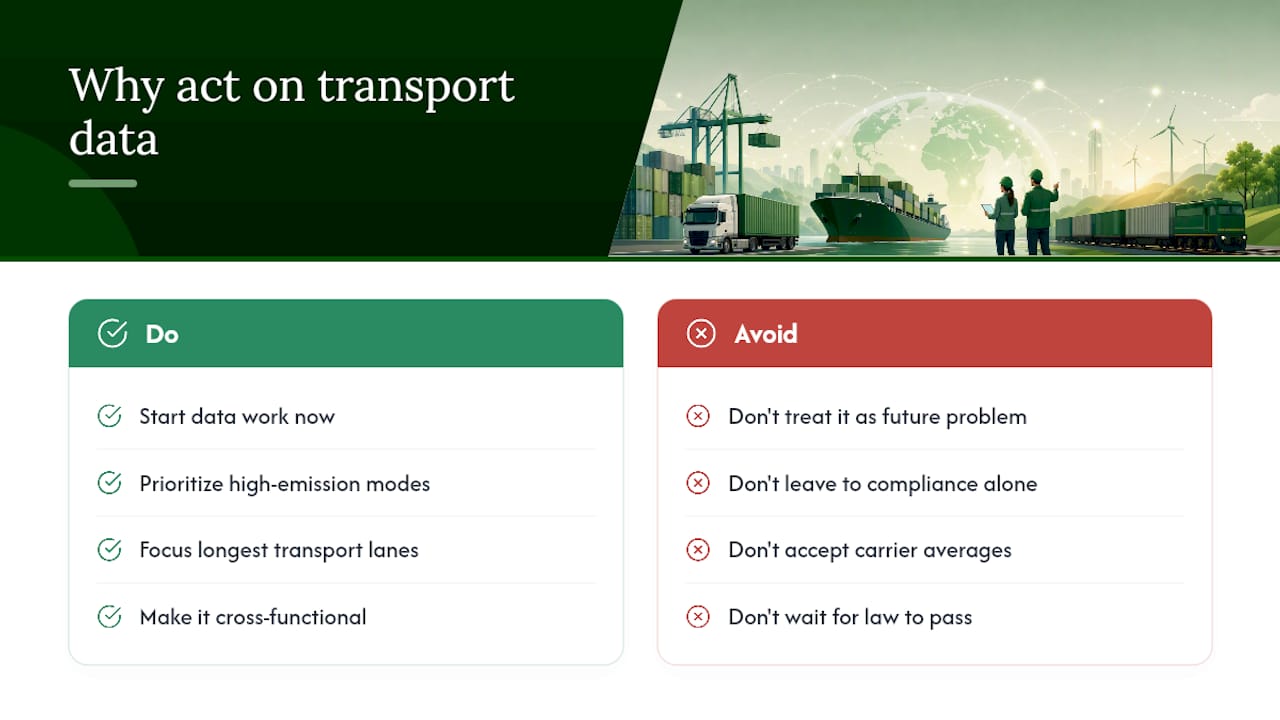
Carriers that get asked for emissions data for the first time under regulatory pressure respond slowly, inconsistently, or with generic averages that do you no favors on certificate costs. Carriers that have been supplying that data for a year already have a rhythm with your compliance team. Prioritize your highest-emission modes and longest lanes first. That’s where defaults hurt most and where supplier data saves the most in certificates.
This isn’t a job for compliance alone. Procurement negotiates the carrier contracts, logistics owns the shipment data, and compliance files the paperwork. Treat it as one project across all three.
— Jake Stevens
A Faster Path to a Filed CBAM Declaration
CarbonOps skips the spreadsheet-building phase entirely: you get a filing-ready CBAM declaration without deploying a platform or onboarding a new system. The four-step workflow covered above, entering imports, matching CN codes, applying emissions, and exporting the final file, is exactly how CarbonOps operates, built for SMB and mid-market importers, compliance officers, and accountants who need a declaration turned around fast rather than a long software rollout.
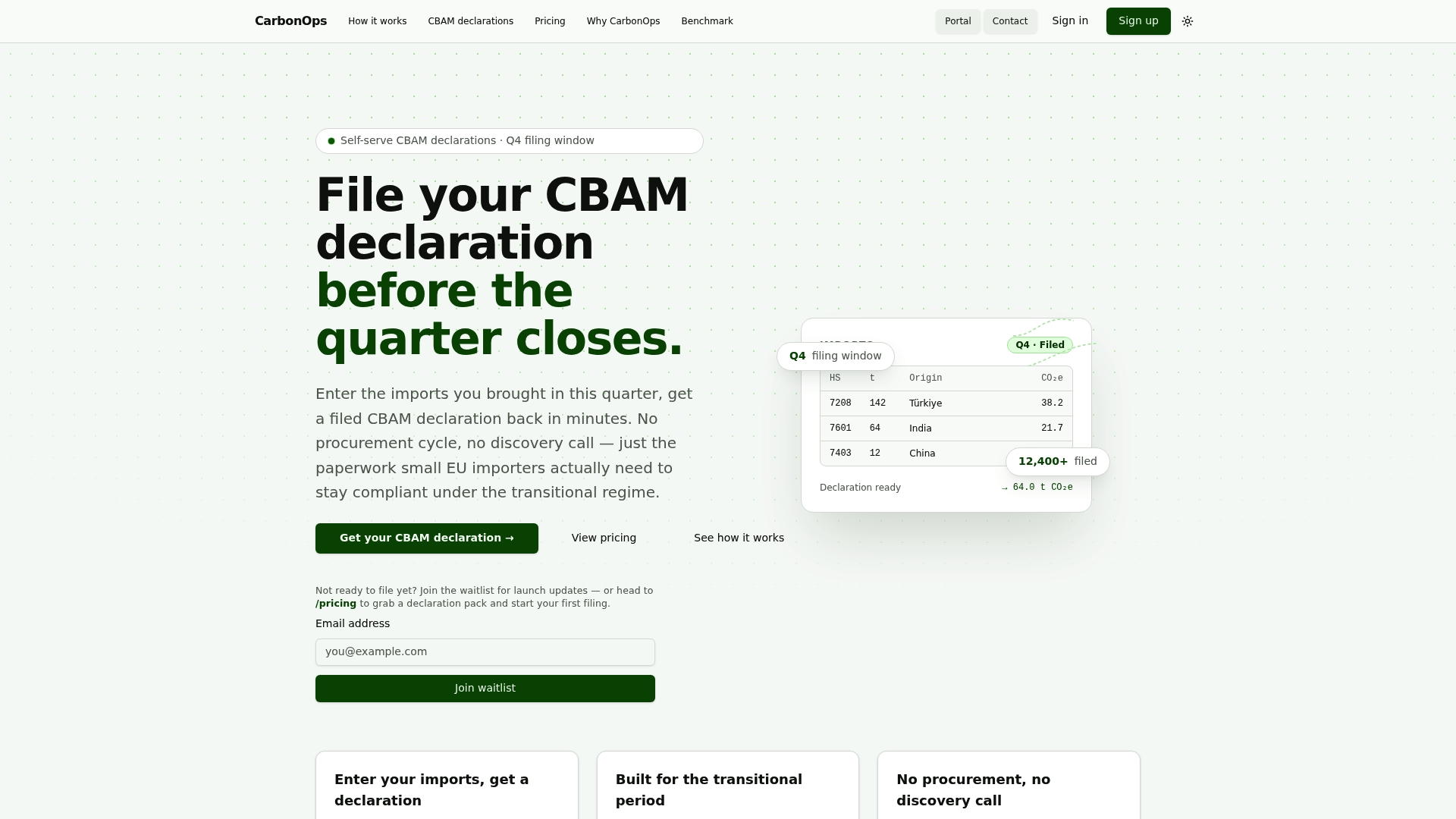
Where supplier-specific data is missing, CarbonOps applies the Commission’s published default values automatically by CN code and country, so every line resolves to a complete figure instead of an unresolved gap. The audit trail persists across filings, which matters as much for a future transport-inclusion mandate as it does for this year’s declaration. Compare pricing options, including single filings and multi-declaration packs, or go straight to filing your declaration with your current shipment data.
Sources
- Regulation (EU) 2026/1030 on the greenhouse gas emissions accounting of transport services
- CBAM legislation and guidance - Taxation and Customs Union
- CBAM extension: Closing the emissions gap